When My Father Let Me In
After years of distance, illness and vulnerability brought us together.
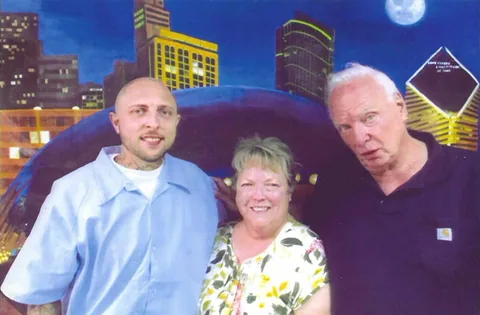
Since my arrest in July 2012, the most difficult relationship that I had to work on was the relationship with my father.
Strangely, at the beginning of 2024, something changed with my father. I truly believed that God answered the prayers that I had been sending His way on this connection with my father. My father’s memory, attention, and cognitive abilities seemed to be slipping since his 75th birthday, and it hadn't been easy to watch. Then, in July of 2024, my father was diagnosed with terminal brain cancer, shaking my family to its core and revealing a possible reason behind his change.
Maybe the profound statements he dropped on me as he hugged me before leaving the Stateville visiting room were brought on by his personal struggle trying to grapple with his own mortality. Quite possibly, it was the minor stroke before his cancer diagnosis that led him to be more open and become vulnerable with his only child.
In January 2024, during a visit, I told my father that I knew, without a doubt, that he loved me. However, I felt like he didn't like me. A week later, as we hugged at the end of our visit, my father asked me, “Why would you think that I hate you?” For the entire week, this was on his mind, and his mind transformed “not like” into “hate.”
For my father, this interaction was huge and cracked open an emotional door, which had never happened before, allowing me to slowly build on this breakthrough moment in our future phone calls and visits.
On Father's Day 2024, while in the visiting room at Stateville Correctional Center, my father dropped another bomb on me: “I hope that you can forgive me for all the mistakes I made.” What? I wanted to lay it on him, all of the things that I felt he could have done differently. I couldn’t do it. At age 36, with 13 of those years being incarcerated, I’ve been able to figure out things. More importantly, I have been able to let go of any animosity or blame.
I responded, “Dad, you don’t have to apologize for anything. I know that every choice you made for better or worse came out of unconditional love for me. You did what you thought was best, and I recognize that today. I’m the one who needs to say sorry.”
As I reflect on the progress in communicating with my father, I have to pause and thank God. In late 2023, I was ready to throw in the towel and accept defeat. It was as if I would never get him to open up beyond the surface of emotions, the level of topics, and communicating as a family.
I've told this story to a couple of close family and friends who have known my father for more than 25 years. None of them could believe the steps my father has taken. For years, I have heard “Well, that’s your dad, Todd.” His generation didn’t open up and share emotions and feelings.
I guess we hit the emotional lottery because it has been a miracle to have my dad take these steps.
I never thought I’d get this version of my dad. And while I wouldn’t wish for the pain that brought us here, I’m grateful for the conversations we’re having now — however late, however fragile.
- Writer
- Todd Mandoline
- First published
- Vol. 2, Issue 2 · 2025 · p. 21
- Original edition
- Download the issue (PDF) (opens in a new tab)