The Illinois Murder Registry
Is it making anyone safer?
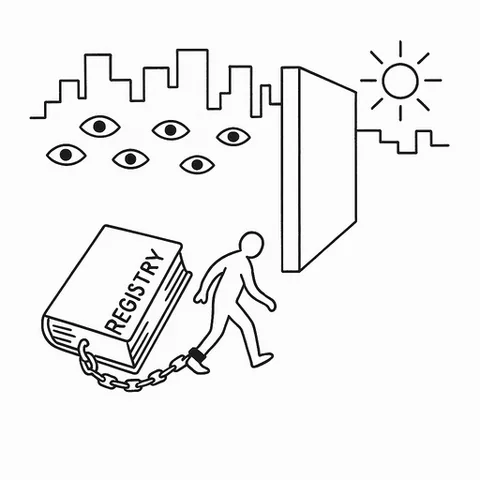
In 2012, Illinois established the Murder and Violent Offender Against Youth Registry (MVOAY), commonly called the “Illinois Murder Registry.”
While its stated purpose is to track violent offenders and protect public safety, the reality is far more troubling. According to the Chicago Torture Justice Center, fewer than half of those listed on the registry have committed crimes involving minors. Most of the crimes that require registration are not murders at all.
Rather than promoting rehabilitation and public safety, the registry imposes severe burdens on returning citizens, perpetuating cycles of punishment and surveillance. Its impact disproportionately affects marginalized communities, particularly Black and Brown individuals, and creates financial, social, and emotional barriers that hinder reintegration into society.
This article will examine the Illinois Murder Registry’s financial impact, racial disparities, and constitutional violations.
In response, I issue a call to action to abolish this punitive system and build a pathway toward justice and equity for returning citizens.
The Creation and Impact of the Registry
The Illinois Murder Registry was modeled after the sex offender registry, first established in 1986. Over time, registries have expanded to include nonsexual crimes and offenses involving minors.
Today, Illinois is one of only five states with a registry for violent offenders, alongside Montana, Indiana, Oklahoma, and Kansas.
In Illinois, individuals on the registry must report their vehicles, residences, and places of employment. This information grants law enforcement, including the Chicago Police Department (CPD), expansive authority to monitor and investigate individuals. These powers often lead to unconstitutional actions, such as unwarranted traffic stops or searches based solely on an officer’s “gut feeling.”
Registrants must remain on the list for ten years and reregister annually, with no formal notification system for when their registration period ends. This lack of clarity often results in accidental noncompliance, leading to further punishment or reincarceration.
As Lynn Green, a graduate of NPEP and former intern for Illinois state Sen. Rachel Ventura, explains: “The Illinois Murder Registry places an undue burden on returning citizens. Noncompliance — whether due to mistakes in registration or system errors — can result in re-incarceration, undermining the progress made by recent criminal justice reforms and compounding the challenges of reintegration.”
Data reveals that most individuals returned to prison from the registry are not reoffending but are incarcerated for technical violations, such as missed deadlines or clerical errors. Rather than supporting rehabilitation, the registry appears designed to create additional obstacles for those attempting to reintegrate into society.
The Human and Social Cost of the Registry
For returning citizens, the registry's financial, social, and emotional burdens are immense. An initial $20 registration fee is followed by a $10 annual renewal fee — costs that may seem minor but are often prohibitive for individuals released after decades in prison with limited resources or job prospects. Beyond the cost to register, violations — whether accidental or warranted, or engineered by law enforcement — incur a mandatory $500 fine and mandatory jail time. In addition, the stigma of being listed makes it significantly harder for returning citizens to find housing, employment, or community support — further perpetuating cycles of marginalization.
As it is currently implemented, the registry also costs Illinois taxpayers millions of dollars, stemming largely from the fact that violations are categorized as felonies, incurring costs for housing the violators in jail, conducting trials, and reincarceration. Data from the Illinois Sentencing Policy Advisory Council (SPAC) reveals that simply reclassifying the violations as misdemeanors would save taxpayers millions of dollars each year by decreasing the cost to enforce the registry, thus leaving funds that could be reallocated. Investing those funds in underdeveloped communities of color would have a far greater impact on public safety than perpetuating a punitive system.
Systemic Bias and Violations of Rights
The registry also raises significant ethical and legal questions. The registry’s disproportionate impact on Black and Brown communities is undeniable. According to The Chicago 400 Campaign, which advocates for repealing public conviction registries, 60% of individuals on the Illinois Murder Registry are Black — despite Black residents comprising only 12.4% of the state’s population. (Similarly, one in every 84 Black men in Illinois is listed on the state’s sex offender registry.)
In addition, the registry often subjects individuals to unwarranted searches and traffic stops, violating their constitutional rights. Its broad application has led to systemic injustices, as seen in M.A. v. Illinois, where the court ruled that the registry violated due process and equal protection for a 13-year-old girl.
Does the registry improve public safety?
Research by the Chicago Torture Justice Center argues conclusively that public registries cause more harm than good. They destabilize returning citizens and serve as obstacles to reintegration, which is critical to prevent recidivism. As legal scholar J.J. Prescott argues, by eroding opportunities and keeping people under constant surveillance, “Public registries turn people into pariahs. Prison as a threat only works if you have something to lose.”
Finally, the data shows that there is no significant difference between the recidivism rate of those on the registry and those who are not. The registry provides the illusion that the state is improving public safety, but that is all that it is: an illusion.
These concerns highlight the registry’s failure to enhance public safety. Instead, it reinforces bias and creates unnecessary hurdles for individuals attempting to rebuild their lives.
A Call to Action
The Illinois Murder Registry does not protect public safety. Instead, it disproportionately targets marginalized communities, creates insurmountable barriers for returning citizens, and wastes taxpayer resources.
Efforts to end the registry, led by organizations like the Chicago Torture Justice Center and the Illinois Sentencing Policy Advisory Council, represent a crucial step toward a fairer, more just system. Illinois can move closer to a future where public safety and rehabilitation coexist by reallocating resources, reducing racial disparities, and promoting effective reintegration strategies.
It’s time to end the Illinois Murder Registry. Together, we can create a system that prioritizes justice, equality, and the opportunity for all individuals to rebuild their lives.
- Writer
- Abdul-Malik Muhammad
- First published
- Vol. 2, Issue 2 · 2025 · pp. 63–64
- Original edition
- Download the issue (PDF) (opens in a new tab)