Shining a Light on the Criminal Legal System
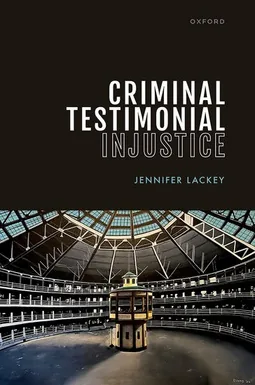
In her recent book, Criminal Testimonial Injustice, NPEP Founding Director and Northwestern Professor of Philosophy Jennifer Lackey touches on a subject most choose to overlook.
Seeing something and saying something are two different things. The problems within our criminal legal system are among those things that everyone sees, but very few acknowledge. When it comes to mass incarceration, the discourse surrounding it is endless. Unfortunately, mass incarceration is just the sum of the equation; very few people focus on the exponent in parentheses, known as the criminal legal system, the creator of mass incarceration.
In her recent book Criminal Testimonial Injustice, Northwestern philosophy professor Jennifer Lackey dives headfirst into shortcomings of the criminal legal system through highlighting the various harms and injustices that are endured before incarceration that contribute to mass incarceration. Lackey provides a philosophical blueprint of the intentional tactics perpetuated by various agents of the criminal legal system. Examining the actions of prosecutors, judges, defense attorneys, and police detectives, Lackey offers an up-close-and-personal view of the “manipulative, deceptive, or coercive tactics that are used to subvert justice.”
For example, when police or government attorneys extract testimony from a suspect and that testimony is given “an unwarranted excess of credibility, the individuals in question are the victims of agential testimonial injustice.” Juries are bullied into believing that the lies suspects are coerced into telling are more credible than the truth those suspects tell in court.
What makes this book so compelling is that Lackey forces the reader to look through the lens of her NPEP students, the victims of the criminal legal system — us — who are the unfortunate recipients of mass incarceration. Unlike most books that solely rely on statistical data, Criminal Testimonial Injustice also recounts the personal experiences that were endured by real-life incarcerated individuals, some of whose mass incarceration ironically gave them the opportunity to become Northwestern students and alumni. In short, Lackey offers a voice to the voiceless.
We’ve all seen the statue of Lady Justice, tall and regal as she stands upright holding a scale. I assumed this represented equality. But when I looked closely at the scale, I noticed that one side outweighs the other. The statue is looking away blindfolded. Lackey’s book forces us to rip off the blindfold and acknowledge that problems of injustice exist within our criminal legal system.
Criminal Testimonial Injustice shows the flip side of the coin that law schools might gloss over. The criminal legal system is biased, and if that is recognized and acknowledged, we can see that it is constructed to oppress specific groups of people.
When I received two natural life sentences for crimes I didn’t commit, my assumptions about the legal system were confirmed. I realized that equality and justice were luxuries allotted to a certain group of people. As a product of marginalization, equality and justice are privileges that I will never see. Lackey’s book offers some hope that the legal system will take her criticism to heart and eliminate legal testimonial injustice in favor of a desire to get at the truth and achieve true justice.
CRIMINAL TESTIMONIAL INJUSTICE SYMPOSIUM AT STATEVILLE CC
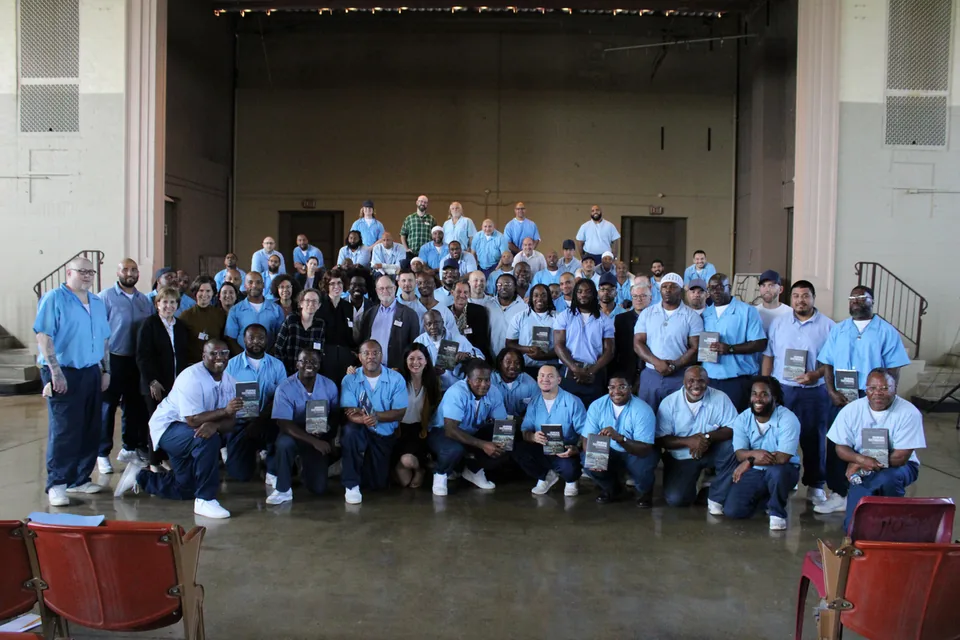
On Sept. 29, 2023, Northwestern students, alumni, and professors gathered at Stateville Correctional Center to discuss Jennifer Lackey’s new book, Criminal Testimonial Injustice. Six NPEP students and seven legal scholars and philosophers were given time to respond to the book.
This was a two-day event; the first day took place 100 yards from the facility’s “round house,” or the “panopticon” as it’s otherwise known (it is also the image used for the cover of Lackey’s book). The second day was held on Northwestern’s Evanston campus.
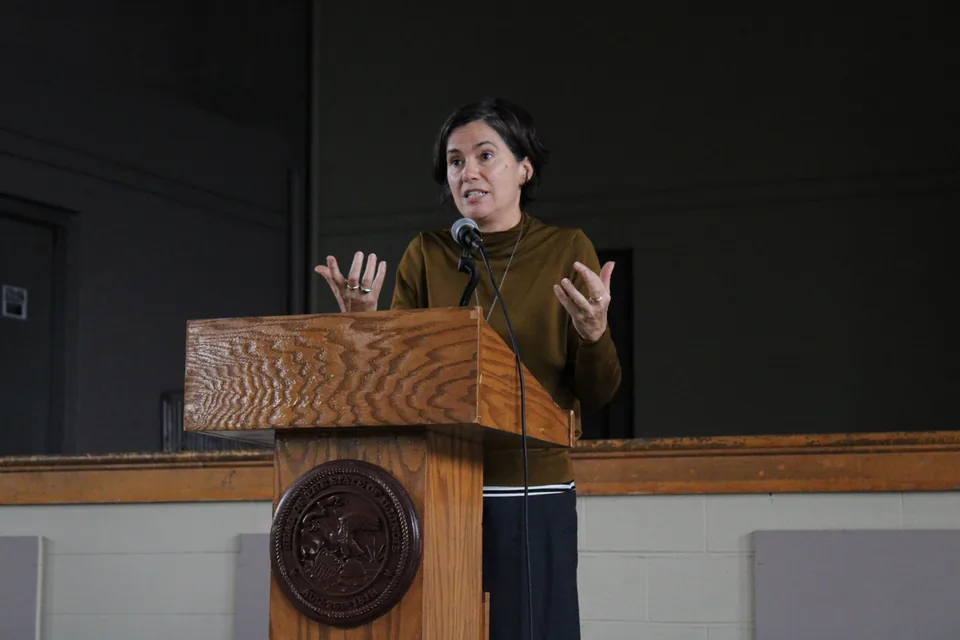
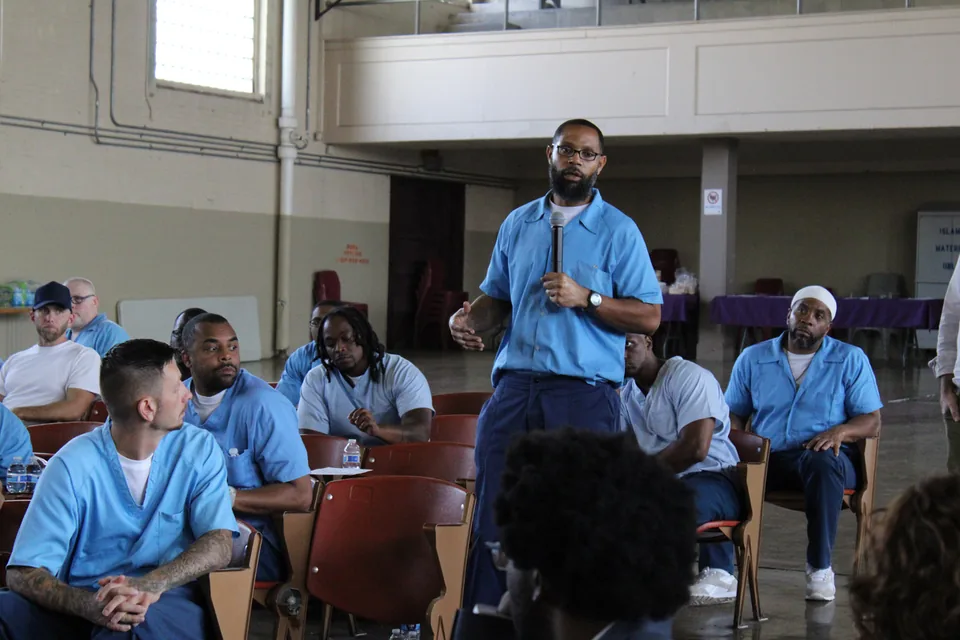
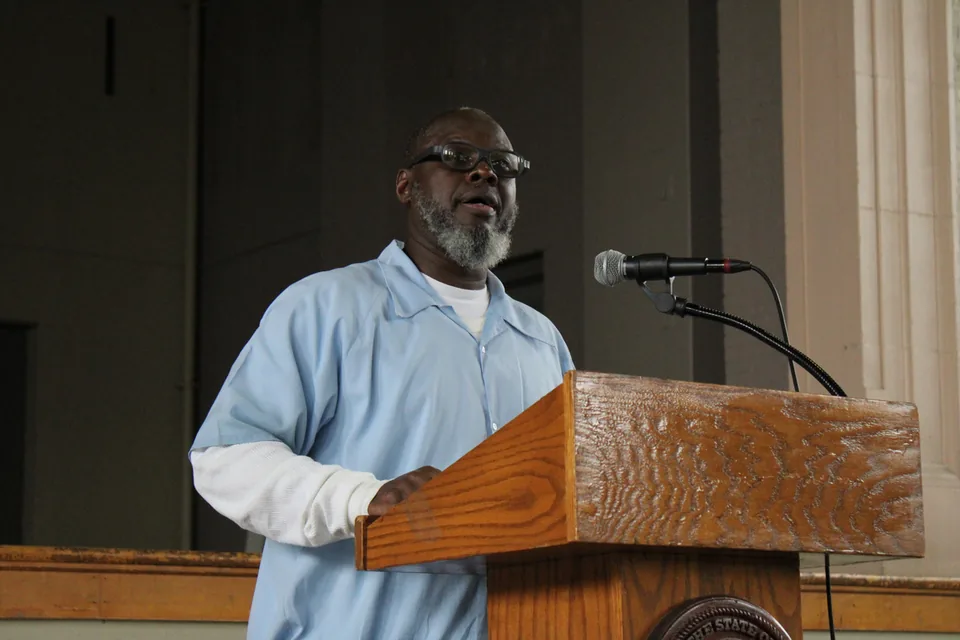
“[In Criminal Testimonial Injustice], Lackey exposes the unseemly underbelly of our so-called criminal justice system, revealing the nefarious tactics, machinations and ploys that are employed by police investigators, prosecutors, judges and even some defense attorneys, to coerce defendants to accept guilty pleas, to elicit false witness testimony, and to obtain false confessions, irrespective of the defendants’ actual guilt or innocence.”
— NPEP graduate William Peeples (pictured), who was one of six NPEP students featured on the panel
- Writer
- Tony Triplett
- First published
- Vol. 1, Issue 1 · 2024 · pp. 25–26
- Original edition
- Download the issue (PDF) (opens in a new tab)