News & InterviewsVol. 2, Issue 2
Sheridan Debuts Edovo
A new digital platform aims to expand access to education in Illinois prisons.
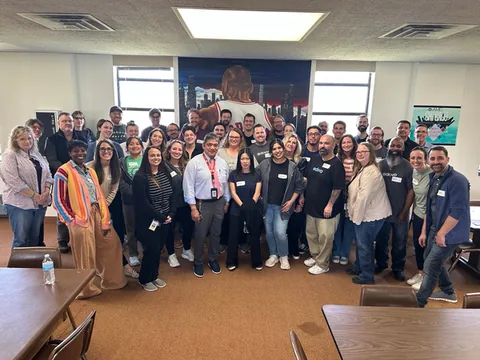
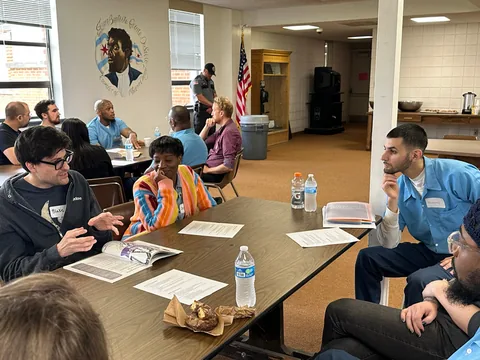
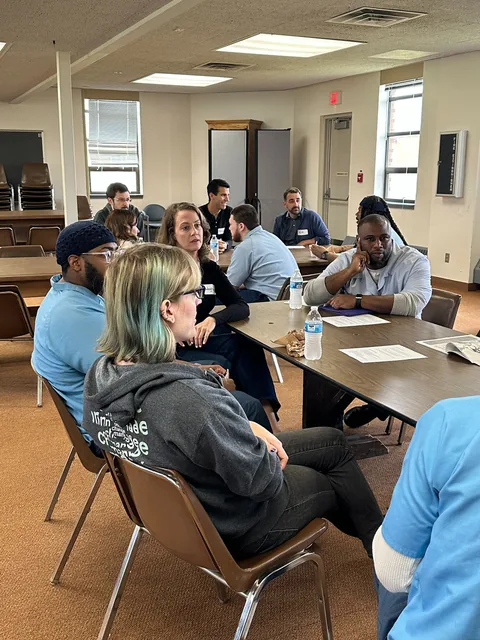
On May 7, 2025, Sheridan Correctional Center hosted an educational justice event introducing Edovo, a digital learning platform for incarcerated individuals that the Illinois Department of Corrections (IDOC) has recently adopted. The event was organized by IDOC Assistant Director Alyssa Williams and Chief of Programs Jennifer Parrack as part of the department’s broader effort to expand access to education behind bars.
Edovo is a nonprofit education platform that provides free tablet- and kiosk-based access to academic, vocational, and wellness content in correctional facilities. According to the organization, the platform is used in over 1,100 facilities nationwide and has reached roughly 900,000 incarcerated individuals, who have completed more than 50 million learning hours. Through the ICSolutions Edovo app, users can access courses in business, the humanities, Western history, science fiction, poetry, LGBTQ+ literature, and more, including documentaries and games for enrichment and recreation. The platform’s free access model contributed to the enthusiasm expressed by Assistant Warden of Programs Portwood, who noted that the service will help incarcerated individuals continue to learn, grow, and support one another.
AWP Portwood was one of many participants in the event, which also included Edovo staff, educators, investors, and students from NPEP.
The opening panel featured several members of the Edovo team, including Roberto, who spent 22 years incarcerated at San Quentin State Prison. During his time inside, Roberto earned a master’s degree in coding. After his release, Edovo hired him — an inspiring example of the power of education and second chances.
The keynote speaker, Assistant Director Williams, described how, in 1987, the Illinois General Assembly passed legislation barring Pell Grants and state financial aid for low-income incarcerated students. She noted that, prior to that time, every prison in Illinois offered access to higher education and vocational certificates. While Pell Grants for incarcerated students were reinstated at the federal level in 2023, many prisons across the state still lack consistent educational programming. Williams emphasized that Edovo offers an additional strategy to expand access beyond what Pell and university partnerships alone can cover.
In addition to in-prison programming, Edovo also offers a reentry tool, Edovo Go, which allows users to continue their education and access past transcripts after release.
NPEP student Mohammed Salahat reflected on the changes he’s seen during his incarceration: “When I came to prison 16 years ago, there weren’t any nonprofit organizations offering a free education. It’s very apparent how deeply people are affected by the lack of access to higher education. To hear about the opportunities Edovo will offer — for free — is a blessing.”
Following the event, Edovo shared a message of appreciation on social media: “We are so grateful to the staff and residents [at] Sheridan Correctional Center in IDOC that we had a chance to meet yesterday! We learned so much and are energized to turn those conversations into action for all of our incarcerated learners and staff that we serve!”
While challenges to educational access remain widespread across the carceral system, gatherings and tools like this create space for connection, reflection, and the possibility of progress — especially when the voices of incarcerated learners are part of the conversation.
- Writer
- Abdul-Malik Muhammad
- Photographer
- Eric G. Beltran
- First published
- Vol. 2, Issue 2 · 2025 · pp. 109–110
- Original edition
- Download the issue (PDF) (opens in a new tab)